Books by Masood Ashraf Raja
The Religious Right and the Talibanization of America
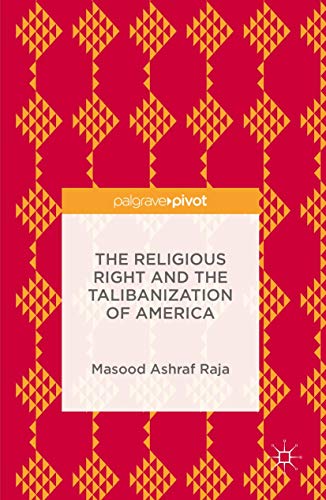
Author(s): Masood Ashraf Raja
Publication date: 2016-05-07
ISBN: 1137590467, ISBN-13: 9781137590466
This highly original book suggests that the practices of Taliban and the American far right, two very significant and poorly understood groups, share common features. This commonality can be found in the philosophical basis of their ideological beliefs, in their comparative worldviews, and in their political practices. Â As Raja argues, the Taliban are much less the product of an irrational fundamentalism, and the radical right in America is much more the result of such a mindset, than Americans recognize. Â After providing a detailed explanation of his theoretical concepts and specialized vocabulary, the author develops a discussion of the subject in this brief but penetrating book. Â This is a book that should attract a wide readership among both academics and the general public.
Critical Pedagogy and Global Literature: Worldly Teaching (New Frontiers in Education, Culture and Politics)
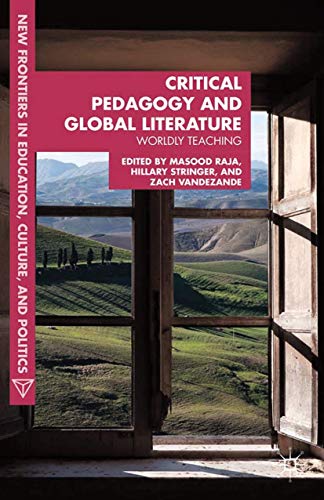
Author(s): M. Raja, H. Stringer, Z. VandeZande
Publication date: 2015-11-28
ISBN: 1349457469, ISBN-13: 9781349457465
In one volume, this edited collection provides both a theoretical and praxis-driven engagement with teaching world literature, focusing on various aspects of critical pedagogy. Included are nine praxis-driven essays by instructors who have taught world literature courses at the university level.
The Postnational Fantasy: Essays on Postcolonialism, Cosmopolitics and Science Fiction (Critical Explorations in Science Fiction and Fantasy)
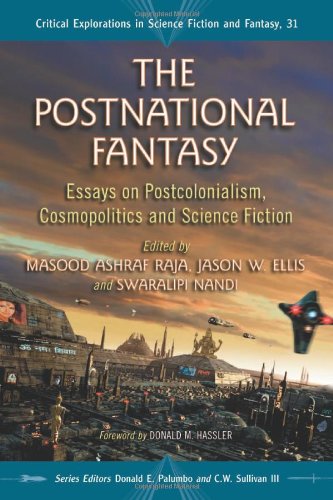
Author(s): Masood Ashraf Raja, Jason W. Ellis, Swaralipi Nandi, Masood Ashraf Raja, Jason W. Ellis, Swaralipi Nandi
Publication date: 2011-04-11
ISBN: 0786461411, ISBN-13: 9780786461417
In twelve critical and interdisciplinary essays, this text examines the relationship between the fantastic in novels, movies and video games and real-world debates about nationalism, globalization and cosmopolitanism. Topics covered include science fiction and postcolonialism, issues of ethnicity, nation and transnational discourse. Altogether, these essays chart a new discursive space, where postcolonial theory and science fiction and fantasy studies work cooperatively to expand our understanding of the fantastic, while simultaneously expanding the scope of postcolonial discussions.
Constructing Pakistan: Foundational Texts and the Rise of Muslim National Identity, 1857- 1947
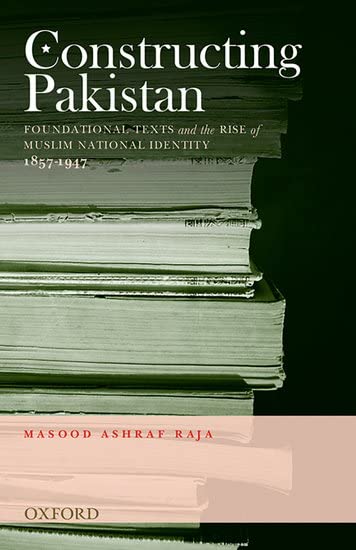
Author(s): Masood Ashraf Raja
Publication date: 2010-06-28
ISBN: 0195478118, ISBN-13: 9780195478112
Constructing Pakistan addresses the previously neglected aspect of postcolonial and historical engagement with the creation and construction of Indian Muslim national identity before the partition of India in 1947. Masood Ashraf Raja's main assertion, challenging the conventional and postcolonial appraisals of the Indian national history, is that the Indian Muslim particular identity and Muslim exceptionalism preceded the rise of Congress or Gandhian nationalism. Using major theories of nationalism-including works of Benedict Anderson, Anthony D. Smith, John Breuilly, Partha Chatterjee and others-and analysis of literary, political, and religious texts produced by Indian Muslims, Constructing Pakistan traces the varied Muslim responses to the post 1857 British ascendancy. This study provides a multilayered discussion of Indian Muslim nationalism from the rise of post 1857 Muslim exceptionalism to the beginnings of a more focused struggle for a nation-sate in the 1940s.
In this dual act of retrieval and intervention, a varied mixture of literary, political, and religious texts are employed to suggest that if the Muslim textual production of this time period is read within the realm of politics and not just within the arena of culture, then the rise of Indian Muslim nationalism can be clearly traced within these texts and through their affective value for the Indian Muslims.
Raja combines close readings of the texts, their reception, and the politics of identity formation specifically related to the rise of Indian Muslim nationalism. The author's main argument hinges on two important assumptions: 1) After the rebellion it becomes extremely important for the Muslim elite to force the dominant British regime into a hegemonic view of the Muslims, and 2) this forces the Muslim elite to develop a language of politics that must always invoke the people in order to enter the British system of privileges and dispensations. Consequently, the rise of early Muslim exceptionalism and its eventual specific nationalistic unfolding, of which Pakistan was one outcome, can then be read as political acts that long preceded the Indian national party politics. The reason most Indian and European historians cannot trace a pronounced Muslim sense of separate identity before the 1940s is because they trace this identity either in the form of resistance or in the shape of party politics. The early loyalism of the Muslim elite, in such strategy, remains unexplained, as it does not fit the resistance model. Constructing Pakistan attempts to re-read this loyalism as a sophisticated form of resistance that, in the end, makes the Muslim question central to the British politics of post-rebellion era.
In this dual act of retrieval and intervention, a varied mixture of literary, political, and religious texts are employed to suggest that if the Muslim textual production of this time period is read within the realm of politics and not just within the arena of culture, then the rise of Indian Muslim nationalism can be clearly traced within these texts and through their affective value for the Indian Muslims.
Raja combines close readings of the texts, their reception, and the politics of identity formation specifically related to the rise of Indian Muslim nationalism. The author's main argument hinges on two important assumptions: 1) After the rebellion it becomes extremely important for the Muslim elite to force the dominant British regime into a hegemonic view of the Muslims, and 2) this forces the Muslim elite to develop a language of politics that must always invoke the people in order to enter the British system of privileges and dispensations. Consequently, the rise of early Muslim exceptionalism and its eventual specific nationalistic unfolding, of which Pakistan was one outcome, can then be read as political acts that long preceded the Indian national party politics. The reason most Indian and European historians cannot trace a pronounced Muslim sense of separate identity before the 1940s is because they trace this identity either in the form of resistance or in the shape of party politics. The early loyalism of the Muslim elite, in such strategy, remains unexplained, as it does not fit the resistance model. Constructing Pakistan attempts to re-read this loyalism as a sophisticated form of resistance that, in the end, makes the Muslim question central to the British politics of post-rebellion era.
Most popular books
Link to this page using the following URL: https://www.facultybookshelf.org/author/masood_ashraf_raja